
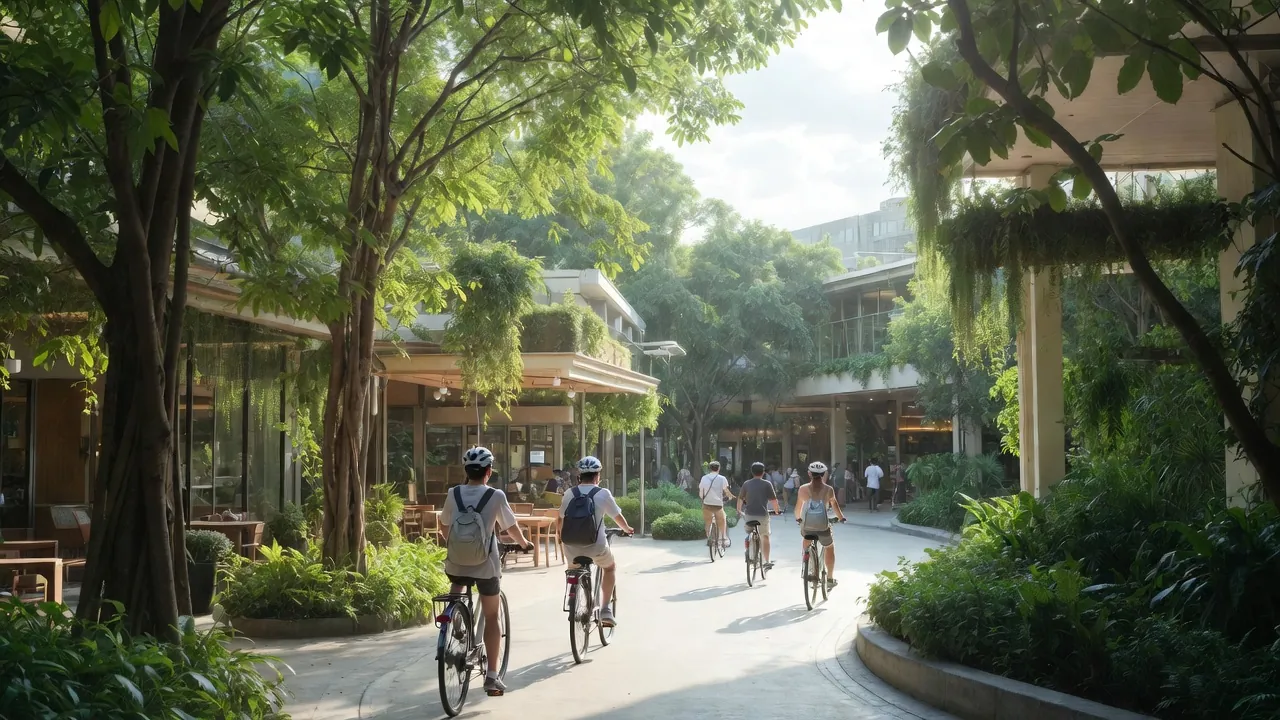
Pedaling Through the Soul of the City: A Guide to Bangkok Sustainable Cycling Tours and Urban Greenery
These tours utilize the city’s network of “off-roads” and elevated canal paths. By avoiding the main traffic arteries, travelers can witness the authentic lifestyle of local neighborhoods while using a carbon-neutral mode of transport. These Bangkok sustainable cycling tours represent a vital shift in how we experience the capital, moving away from the gridlock of Sukhumvit and toward the breezy, hidden arteries that have defined Thai life for centuries. By choosing two wheels over four, you are actively contributing to the city’s “Green Bangkok 2030” goals and ensuring that your presence supports the micro-economies of the back-alley communities.
I remember the first time I traded a motorcycle taxi for a bicycle in Bangkok. I was skeptical; I thought the heat and the chaos would be insurmountable. But as soon as my guide, P’Art, led me onto the narrow concrete paths that hover over the canals of Phunthawat, the temperature dropped five degrees. The roar of the city faded, replaced by the rhythmic clink of my bike chain and the sound of locals calling out greetings from their porch-side gardens. “The real Bangkok doesn’t live on the main roads,” P’Art told me as we ducked under a low-hanging frangipani branch. “It lives where the cars can’t reach.” In my fifteen years of covering Southeast Asia, I’ve found that nothing breaks the barrier between “tourist” and “guest” faster than arriving at a local market on a bicycle.
Why Bangkok Sustainable Cycling Tours Should Be on Your List Right Now
Bangkok is in the midst of an urban renaissance. For decades, the city was synonymous with smog and traffic, but under the “Thailand Tourism Next 2026” framework, the capital is rebranding itself as a hub for the “Life Economy” and “Circular Economy”. The city is aggressively pursuing its “Green Bangkok 2030” project, which aims to increase green space to 10 square meters per person and promote eco-friendly transport infrastructure.
By booking Bangkok sustainable cycling tours, you are at the forefront of this movement. Travelers are no longer satisfied with the “check-in” style of tourism; they want deeper engagement with the city’s “Soft Power”—its food, its community stories, and its hidden history. These tours offer a “Must Seek” experience that traditional bus tours simply cannot replicate. Recent developments in green logistics mean that many tour operators now use high-quality, locally-maintained equipment and partner with community-based enterprises to ensure that revenue stays within the neighborhoods you pedal through.
Best Time to Visit & Practical Planning Tips
To enjoy cycling in a tropical metropolis, strategy is everything.
- Weather & Season: The “Golden Window” for cycling is the cool season from November to February. Humidity is at its annual low, and the breeze is genuinely refreshing. If you visit during the hot season (March–May), strictly stick to sunrise tours (starting at 6:30 AM) to avoid the midday sun.
- Crowds & Timing: Weekday mornings are best for observing the authentic “commute” of residents along the canal paths. Weekend tours are great for visiting “secret” community markets that only open on Saturday and Sunday.
- Getting Around: Most tour meeting points are strategically located near MRT (Blue Line) or BTS (Green Line) stations. Using public transport to reach your starting point is the most sustainable way to begin your day.
- Sample Budgets:
Top 5 Must-Experience Highlights on a Bangkok Cycling Tour
1. The Elevated Paths of Bang Krachao
Known as the “Green Lung,” this river-enclosed oasis is the crown jewel of urban sustainability. Cycling here feels like entering a different decade. You’ll navigate narrow concrete walkways that snake through mangrove forests and coconut plantations, high above the marshy ground.
2. Back-Alley “Trot” Through Talat Noi
One of the city’s oldest neighborhoods, Talat Noi is a labyrinth of mechanical parts shops, ancient shrines, and vibrant street art. Cycling allows you to witness the “Circular Economy” in action as local welders transform scrap metal into art and spare parts.
3. Hidden Temples of Thonburi
While the Grand Palace draws the crowds, the Thonburi side of the river holds quiet gems like Wat Kalayanamit. These tours often stop at smaller, community-maintained temples where you can engage in mindfulness discussions with local monks in a serene, non-touristic setting.
4. The Kudeejeen Portuguese Community
Pedal into a pocket of history where the descendants of 18th-century Portuguese settlers still live. You can visit small family bakeries to taste Khanom Farang, a traditional cupcake that represents the “Soft Power” of Thai-European cultural fusion.
5. Urban Farm Stops in Phra Khanong
Some progressive tours now stop at rooftop or community gardens where residents grow organic vegetables amidst the concrete. It’s a hands-on look at how “Green Cities” are being built from the ground up.
Detailed 5-Day “Pedal & Purpose” Itinerary
Day 1: The Green Lung Immersion
- 07:30 AM: Take the BTS to Bang Na, followed by a short ferry across the river.
- 08:30 AM: Begin your Bang Krachao loop. Visit the Siamese Fighting Fish gallery and the Sri Nakhon Khuean Khan Park.
- 12:00 PM: Organic lunch at a riverside community café.
- 03:00 PM: Visit a local incense-making workshop before ferrying back.
- Estimated Cost: 1,800 THB.
Day 2: Heritage and Artisans
- 09:00 AM: Meet your guide in Talat Noi. Cycle through the “Wall of Art” and see the historic Sol Heng Tai Mansion.
- 11:30 AM: Cross the Phra Phuttha Yodfa Bridge to the Thonburi side.
- 01:00 PM: Lunch in the Kudeejeen community—try the local specialty noodles.
- 03:30 PM: Visit a traditional bronze-bowl making community (Ban Bu).
- Estimated Cost: 2,200 THB.
Day 3: The Market Trail
- 08:00 AM: Cycle to the Taling Chan Floating Market. Experience the “Must Taste” local produce directly from the boats.
- 11:00 AM: Pedal along the canal-side paths toward Khlong Lat Mayom.
- 01:30 PM: Participate in a “Trash to Treasure” workshop with a local community group.
- Estimated Cost: 1,500 THB.
Day 4: Urban Resilience
- 09:30 AM: Cycle through the Ari neighborhood to see how local residents maintain a “liveable, leafy atmosphere” despite development.
- 12:30 PM: Sustainable gastronomy lunch at an eco-certified restaurant in Phaya Thai.
- 03:00 PM: Visit the “Green Bangkok 2030” pilot park sites to learn about urban reforestation.
- Estimated Cost: 1,200 THB.
Day 5: Sunset and Reflection
- 04:00 PM: A late afternoon “Golden Hour” ride through the historic Rattanakosin district.
- 06:30 PM: Dinner at a riverside spot with views of the illuminated Wat Arun.
- 08:00 PM: Community Voting: Use the Tour in Thailand app to vote on which urban bike path restoration project should receive a grant from the Environmental Fund.
- Estimated Cost: 2,500 THB.
Where to Stay: Best Eco-Friendly & Authentic Accommodations
- Luxury: The Raweekanlaya Bangkok: Located in a historic 19th-century manor, this hotel features over 900 square meters of greenery and prioritizes organic sourcing for its wellness-focused menu.
- Mid-Range: Riva Surya Bangkok: A boutique hotel on the Chao Phraya River that holds high sustainability standards and offers easy access to the river ferries for carbon-neutral transport.
- Budget: Bangkok Bed and Bike: Specifically designed for cycling enthusiasts, this hostel offers secure bike storage and is located in a beautifully restored building near the historic center.
Food & Local Cuisine Guide: Fueling Your Ride
Cycling in Bangkok is a “Must Taste” adventure. You’ll find the best food in the places where a car could never park.
- Must-Try Dish: Kuay Tiao Rua (Boat Noodles). Historically served from boats in the canals, these small bowls are the perfect high-energy, mid-ride snack.
- Local Treat: Khanom Krok (Coconut Pancakes). Look for the street vendors using traditional clay pans—they are often the heart of the neighborhood’s morning social life.
- Etiquette: When stopping at a community market, it’s polite to buy a small snack or drink from a local vendor to show appreciation for using their paths.
Sustainable & Responsible Travel Tips
- Hydrate Responsibly: Avoid buying plastic bottles. Use the reverse osmosis water machines found throughout the city to refill your reusable bottle for just 1 THB.
- Mind the “Soi”: These narrow alleys are shared spaces. Always yield to pedestrians and elderly residents. A smile and a “Sawatdee Krub/Ka” go a long way.
- Support the Fund: Ensure your tour operator is a partner of the Thailand Environmental Fund. A portion of your fee should be traceable to local urban conservation.
- Stay on the Path: Elevated canal paths are vital transport links for locals. Avoid blocking the way for resident motorbikes or commuters.
Packing List & What to Know Before You Go
- Breathable Clothing: Lightweight, moisture-wicking shirts are essential. Avoid dark colors that absorb heat.
- Sun Protection: High-SPF sunscreen and a peaked cap that fits under a helmet.
- Small Daypack: To carry your reusable water bottle and any “Must Buy” local handicrafts you find along the way.
- Digital Prep: Download a map of the city’s bike routes, but rely on your guide for the “off-grid” segments.
Frequently Asked Questions (FAQ)
Is it safe to cycle in Bangkok’s traffic?
These tours are specifically designed to avoid major roads. About 90% of the route takes place on quiet back-alleys, elevated canal paths, and park trails where cars are not allowed.
Do I need to be a professional cyclist?
Not at all. The routes are mostly flat (Bangkok is at sea level!) and the pace is leisurely. If you’re concerned about the heat, many partners offer electric-assist bikes.
What if it rains?
Tropical showers are usually brief. Most tours provide ponchos and will wait out a heavy downpour at a local café—a great excuse for an extra Thai tea!
Conclusion: See the City, Save the Soul
Choosing a Bangkok sustainable cycling tour is an act of rebellion against the “Mass Tourism” narrative. It is a way to say that the heartbeat of a city isn’t found in its shopping malls, but in its stories and its soil. By pedaling through these hidden green lungs and ancient alleys, you aren’t just a visitor; you are a participant in Bangkok’s journey toward a cleaner, greener, and more connected future.
Ready to see the side of Bangkok the guidebooks missed? Book your cycling adventure today and cast your vote for the next urban reforestation project!

Comment (0)