
Floating with the Farmers: A Guide to Taling Chan and Authentic Floating Markets in Bangkok
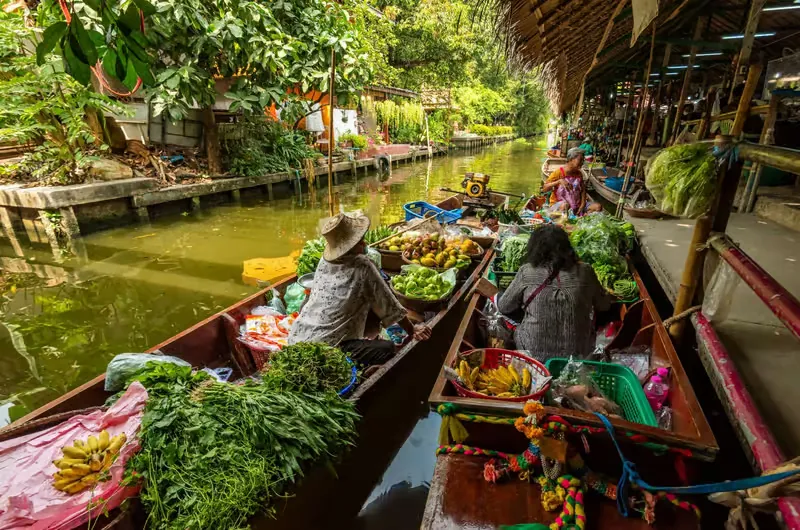
Unlike more commercialized markets, Taling Chan remains a hub for local farmers to sell fresh produce directly from their boats. It promotes traditional riverine commerce and supports the livelihoods of small-scale agriculturalists. Choosing an authentic floating market Bangkok experience like Taling Chan is a direct way to support the “Circular Economy” and participate in sustainable travel in Bangkok. Here, the rhythm of the water dictates the pace of life, and every purchase you make stays in the hands of the people who grew the food.
There’s a specific magic to a Saturday morning at Taling Chan. The air is thick with the scent of grilling giant river prawns and the sweet, grassy aroma of freshly cut orchids. I remember sitting on a low wooden stool by the water’s edge, watching an elderly woman, Grandma Som, paddle her boat toward me. She wasn’t selling mass-produced souvenirs; she was selling mangoes from her own orchard, just three kilometers up-canal. “The river is our lifeblood,” she told me as she handed over a basket. “When you buy from us, you keep the river clean.” In my fifteen years of covering the markets of the world, Taling Chan remains one of the few places where the boundary between “market” and “community” is non-existent. It’s a “Must Taste” journey that feeds both the body and the soul.
Why Authentic Markets Should Be on Your List Right Now
As we move through 2026, the “Thailand Tourism Next” framework has identified “Sustainable Gastronomy” and “Regional Income Distribution” as key pillars for quality growth. The days of mass-produced tours to overcrowded markets are being replaced by a desire for “Fascinating Experiences” that offer depth and local connection.
Taling Chan is the poster child for this shift. While the more famous Damnoen Saduak has become a “tourist trap,” Taling Chan has resisted commercial over-development. It operates under a “Circular Economy” model where food waste from the market is composted and returned to the local orchards. By visiting, you are participating in a “Blue Economy” initiative that protects the city’s water quality and supports small-scale farming. As conscious travelers increasingly seek out “Must Seek” hidden gems, Taling Chan offers a way to experience the “Venice of the East” as it was meant to be.
Best Time to Visit & Practical Planning Tips
To get the most out of your authentic floating market Bangkok journey, timing is everything.
- When to Go: Taling Chan is only open on Saturdays and Sundays from 08:00 AM to 05:00 PM. Aim to arrive by 09:30 AM to snag a seat on the floating dining platforms before the lunchtime rush.
- Weather: The cool season (November to February) is the most comfortable for walking the canal-side paths.
- Getting There: Skip the taxi. Take the SRT Light Red Line to Taling Chan Station. From there, it’s a short 5-minute electric Tuk-Tuk ride to the market entrance. This is part of the “Green Logistics” initiative to reduce urban emissions.
- Sample Budgets:
Top 5 Must-Experience Highlights at Taling Chan Floating Market
1. The Floating Seafood Feast
Sit on the stilted wooden platforms and order directly from the boats. The giant river prawns (Kung Mae Nam) are the legendary “Must Taste” dish here. They are sourced using small-scale sustainable fishing methods that protect the river’s biodiversity.
2. The Traditional Longtail Boat Tours
Hop on a community-managed boat for a tour of the surrounding Khlongs. You’ll see traditional wooden homes, hidden temples, and “Green Lungs” that are invisible from the road. The boatmen are often local residents who share stories of the neighborhood’s resilience.
3. The Taling Chan Orchid Farms
A short boat ride away are the local orchid nurseries. Taling Chan is one of Bangkok’s main producers of these “Must Buy” blooms. You can learn about native Thai orchid species and even participate in a sustainable gardening workshop.
4. Live Thai Music and Merit-Making
In the center of the market, you’ll often find local seniors playing traditional Thai instruments. It’s the perfect backdrop for “making merit” by offering food to the monks who occasionally paddle through the market in the early morning.
5. The “Circular Economy” Craft Stalls
Look for vendors selling upcycled products made from coconut husks and banana leaves. These items represent the “Soft Power” of Thai craftsmanship and help reduce waste in the canal system.
Detailed 1-Day “River Resilience” Itinerary
- 08:30 AM: Arrive at SRT Taling Chan and take an electric Tuk-Tuk to the market.
- 09:00 AM: Breakfast of Khanom Krok (coconut pancakes) from a boat vendor.
- 10:30 AM: Community-led longtail boat tour through the narrow canals to see the “Green Lung” of the west.
- 12:30 PM: Lunch on the floating platform—try the Som Tum and Grilled Fish.
- 02:30 PM: Visit a local orchid farm and learn about sustainable water management in the delta.
- 04:00 PM: Community Voting: Use the Tour in Thailand app to vote for a local canal-cleaning project funded by the Thailand Environmental Fund.
- Cost: ~1,200 THB.
Where to Stay: Best Eco-Friendly & Authentic Accommodations
- Luxury/Boutique: Riva Surya Bangkok: Located on the Chao Phraya River, this hotel is a leader in “Sustainable Luxury” and offers easy boat access to the Taling Chan district.
- Mid-Range: Loy La Long Hotel: A restored wooden house on the river that uses reclaimed materials and provides a front-row seat to the city’s “Blue Economy.”
- Budget: Bangkok Bed and Bike: While in the city center, they offer guided cycling tours out to the Taling Chan area, promoting carbon-neutral transport.
Food & Local Cuisine Guide: The Flavors of the Khlongs
Eating at Taling Chan is a lesson in “Must Taste” authenticity.
- Must-Try Dish: Kuay Tiao Rua (Boat Noodles). These tiny bowls of flavorful broth are served exactly as they have been for a century—from a boat.
- Sweet Treat: Thong Yod and Thong Yip (egg yolk sweets) made with organic duck eggs from the local farms.
- Etiquette: Many vendors have switched to banana leaf plates and bamboo cutlery. Always return your reusable items to the designated “Zero Waste” stations.
Sustainable & Responsible Travel Tips
- Support Small-Scale: Buy your fruits and plants directly from the boat vendors. This ensures that 100% of your money goes to the producer rather than a middleman.
- Hydrate Sustainably: Taling Chan has several water refill stations. Avoid buying single-use plastic bottles, which are a major threat to the “Life Below Water” in the canals.
- Respect Private Life: The canals are lined with private homes. When on a boat tour, keep your voice down and avoid photographing people inside their houses.
- Cast Your Vote: After your visit, use the platform to vote on which local environmental project—like a new waste trap for the river—should receive funding from the Thailand Environmental Fund.
Packing List & What to Know Before You Go
- Light, Breathable Clothing: The market can get humid, so wear cotton or linen.
- Sun Protection: A wide-brimmed hat and eco-friendly sunscreen for the boat tour.
- Reusable Kit: A cloth bag for your market finds and a set of bamboo cutlery.
- Cash: While PromptPay is growing, many boat vendors still prefer cash.
Frequently Asked Questions (FAQ)
Is Taling Chan better than Damnoen Saduak?
If you want an authentic, low-impact experience, yes. Taling Chan is closer to the city, less commercialized, and directly supports local farmers rather than mass-market tour agencies.
Can I visit Taling Chan on a weekday?
The floating market itself is only open on weekends. However, the surrounding community and some of the permanent shops are open daily for those seeking a quiet canal-side stroll.
Is the boat tour safe for seniors?
Yes. The longtail boats are stable, and the canal waters are calm. For those with mobility issues, operators like Tripseed can arrange specialized accessible boat tours.
Conclusion: A Living River Legacy
Choosing to visit the Taling Chan Floating Market is an act of supporting a way of life that is as fragile as it is beautiful. It is a way to say that the value of a river isn’t measured in the luxury condos built on its banks, but in the livelihoods it sustains and the food it provides. By floating with the farmers of Taling Chan, you aren’t just a tourist; you are a guardian of Bangkok’s riverine heritage. You’ll leave with a full stomach and a deeper understanding of the “Value over Volume” movement that is making the “Land of Smiles” a better place for everyone.
Ready to taste the real Bangkok? Book your Taling Chan experience today and cast your vote for river conservation!

Comment (0)