
Regenerative Depths: A Guide to Koh Tao Coral Restoration and Sustainable Diving
With over 75% of Koh Tao’s reefs affected by bleaching, tourism here must be regenerative rather than extractive. Through the New Heaven Reef Conservation program, divers and snorkelers participate in hands-on sessions for coral propagation, marine debris removal, and reef monitoring. Engaging with coral restoration in Koh Tao is more than just a dive; it is an act of marine conservation in Thailand that honors the “Soft Power” of scientific stewardship while promoting a “Value over Volume” approach to underwater exploration. By participating, you gain the skills needed to protect the very reefs you love to explore.
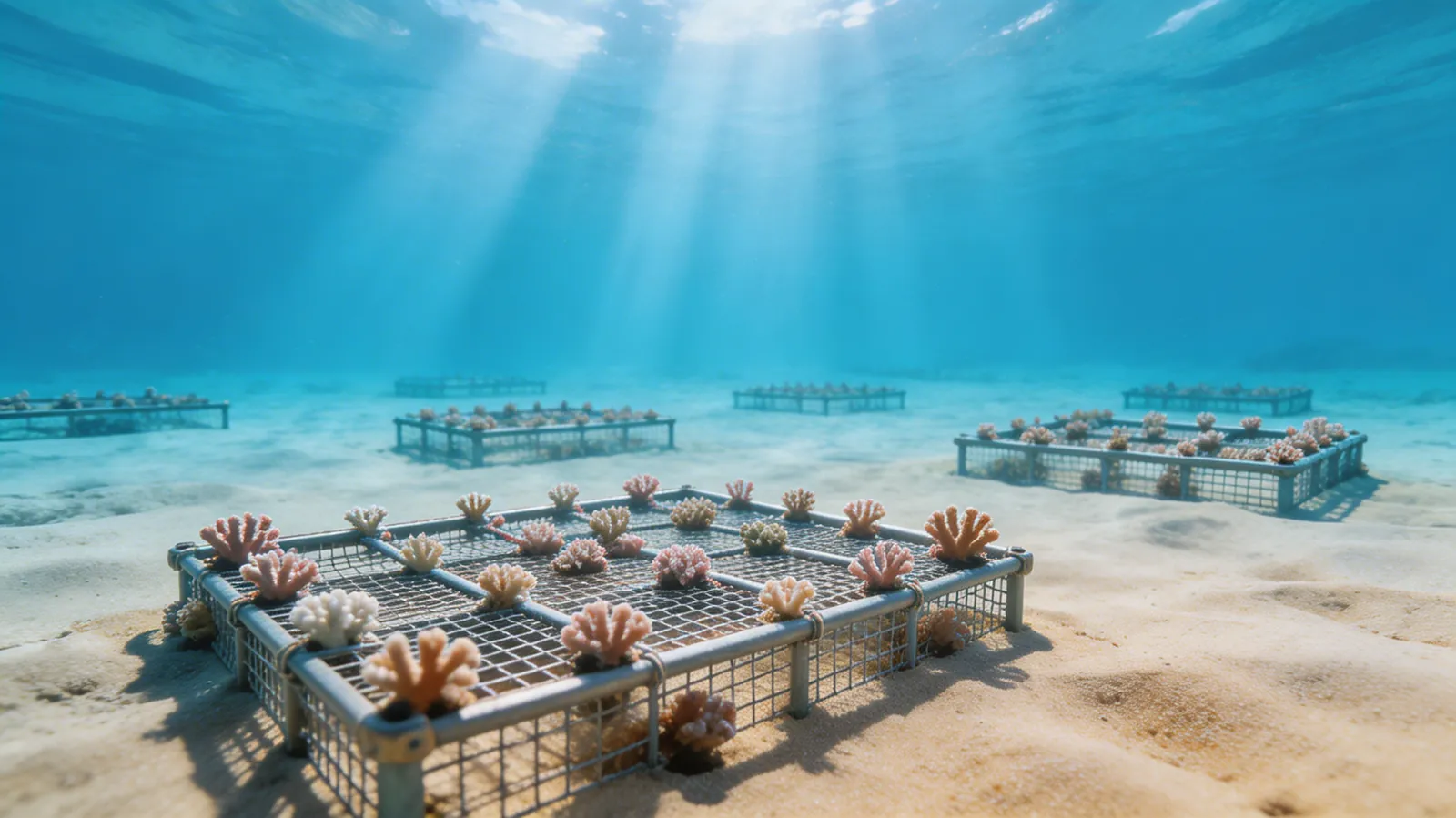
I remember my first time transplanting a small fragment of staghorn coral onto an artificial reef structure at Southwest Pinnacle. Below the surface, the only sound was my own breathing and the distant clicking of snapping shrimp. As I secured the fragment, a massive whale shark—a “gentle giant” of the Gulf—glided peacefully in the distance. A marine biologist, Khun Devrim, told me, “We don’t just dive to see; we dive to save.” In fifteen years of reporting on ocean health, the New Heaven program remains the gold standard because it turns every diver into a citizen scientist, providing verifiable data for national conservation efforts.
Why Regenerative Diving Should Be on Your List Right Now
As Thailand moves toward its 2026 goals under the “Thailand Tourism Next” framework, the focus has shifted toward the “Circular Economy” and “Life Below Water” (SDG 14). The goal is to move away from mass-market “check-in” diving and toward “Fascinating Experiences” that offer depth and personal transformation.
The Koh Tao coral restoration program is the lighthouse for this movement. While many dive schools focus on volume, New Heaven prioritizes high-quality training and ecological monitoring. By participating, you are supporting the “Circular Economy” of marine research. The data you collect is used by the Department of Marine and Coastal Resources to create new laws for reef protection. As conscious travelers increasingly prioritize destinations that “do good,” this program offers a way to experience the majesty of the Thai underwater world while making a measurable positive impact.
Best Time to Visit & Practical Planning Tips
To get the most out of your conservation course, timing is critical.
- When to Go: The best time for sustainable diving in Koh Tao is from March to September, when visibility is highest and the seas are calm. The “Whale Shark Season” peaks between March and May.
- Weather: During the monsoon season (October–December), visibility can drop, but it is an ideal time for “Muck Diving” surveys to identify rare invertebrates.
- Getting There: Take the ferry from Chumphon or Koh Samui. For a sustainable arrival, use the “Green Logistics” night train from Bangkok and the high-speed catamaran for a lower carbon footprint.
- Sample Budgets:
Top 5 Must-Experience Highlights in Koh Tao Restoration
1. Coral Taxonomy and ID Course
Learn to identify over 20 different genera of corals. It’s a “Must Seek” educational moment that turns a “pretty reef” into a complex, living city that you finally understand.
2. Artificial Reef Construction
Join a workshop on land to construct a “mineral accretion” structure. You’ll learn how electric currents can accelerate coral growth, a masterclass in “Nature-Based Innovation.”
3. Sea Turtle Nursery Visit
New Heaven runs a sea turtle head-starting program for non-divers. You can help clean the tanks and learn about the rehabilitation of endangered hawksbill and green turtles.
4. Marine Debris Survey
Dive into “The Muck” to survey and remove marine debris like discarded fishing nets (ghost gear). It is a hands-on way to contribute to the “Life Below Water” goal.
5. Underwater Sculpture Trail
Explore the “Jan-Jan” or “Ocean Utopia” sculpture reefs. These aren’t just for art; they are designed to divert pressure from natural reefs while providing new habitats for fish.
Detailed 5-Day “Regenerative Diver” Itinerary
Day 1: The Ecosystem Foundation
- 09:00 AM: Morning lecture on marine ecology and the threats facing Koh Tao’s reefs.
- 01:00 PM: Introductory survey dive to assess reef substrate and invertebrate health.
- 04:30 PM: Sunset debrief and data entry for the Ecological Monitoring Program (EMP).
- Cost: Part of certification package.
Day 2: The Coral Nursery
- 09:00 AM: Workshop on land: building artificial reef structures using upcycled materials.
- 01:00 PM: Underwater session: transplanting coral fragments onto nursery tables.
- 06:30 PM: “Sustainable Gastronomy” dinner at a local zero-waste restaurant.
- Cost: Part of certification package.
Day 3: Predator Control
- 09:00 AM: Lecture on coral predators like Crown-of-Thorns starfish and Drupella snails.
- 01:00 PM: Conservation dive to manage predator populations and monitor biodiversity.
- 03:30 PM: Visit the island’s organic garden project to learn about land-based pollution.
- Cost: Part of certification package.
Day 4: Large Marine Life
- 09:00 AM: Shark and Sea Turtle ecology workshop—learn to ID individual animals for research.
- 01:00 PM: Survey dive at Southwest Pinnacle or Shark Island.
- 04:30 PM: Community Voting: Use the Tour in Thailand app to vote for the next mooring line installation project.
- Cost: Part of certification package.
Day 5: Advanced Monitoring
- 09:00 AM: Final exam and review of the “7 Greens” of sustainable travel.
- 12:30 PM: Farewell lunch and presentation of your Conservation Diver certifications.
- Cost: Part of certification package.
Where to Stay: Best Eco-Friendly & Authentic Accommodations
- Authentic Choice: Chalok Baan Kao Community Stays: Live in a village setting with local hosts who are committed to reef protection.
- Mid-Range: New Heaven Eco-Resort: Features simple, clean accommodations with solar power and a strict gray-water recycling system.
- Boutique Eco-Stay: The Place Koh Tao: A high-value stay that prioritizes low-impact luxury and easy access to the conservation hubs.
Food & Local Cuisine Guide: Tasting the Gulf
Eating in Koh Tao is a lesson in “Must Taste” sustainable seafood.
- Must-Try Dish: Gaeng Som with local reef fish, sourced only from small-scale sustainable fishers.
- The “Must Taste” Drink: Fresh lemongrass and honey tea, served in a reusable cup at a “Green Leaf” certified café.
- Etiquette: Koh Tao is a leader in “Zero Waste” initiatives. Always use the designated bins for waste separation and bring your own reusable container for take-out.
Sustainable & Responsible Travel Tips
- Green Fins Standard: Never use your fins to touch the sand or the reef. Maintain perfect buoyancy to avoid accidental damage.
- No Plastic on the Boat: Thailand has a “No Foam, No Plastic” policy for all marine parks. Carry a reusable bottle; all dive schools provide free refills.
- Mind the Chemicals: Standard sunscreens kill coral. Use only reef-safe, mineral-based sunscreens (zinc or titanium).
- Support the Fund: A portion of your course fee goes to the Thailand Environmental Fund. Don’t forget to vote on the platform for local water management projects.
Packing List & What to Know Before You Go
- Diving Certification: You need at least an Open Water certification to participate in the full conservation course.
- Reef-Safe Sunscreen: Essential for protecting your skin and the coral.
- Reusable Kit: A sturdy water bottle and a set of bamboo cutlery.
- Connectivity: The island has excellent Wi-Fi, but download the Tour in Thailand app to access the marine ID digital guides.
FAQ
Can I participate if I’m not a diver?
Yes! New Heaven offers non-diver programs like the sea turtle nursery visit and on-land artificial reef workshops.
How do I know my dive is truly sustainable?
Look for the “Green Fins” or “Thailand Good Travel” marks, or check the dive school’s profile on the Tour in Thailand marketplace app.
Is coral restoration really effective?
Yes! Long-term studies in Koh Tao show that transplanted corals on managed artificial reefs have a survival rate of over 80% and significantly increase local fish biodiversity.
Conclusion: Reclaiming the Rhythm of the Reef
Choosing the Koh Tao Coral Restoration program is an act of supporting an ocean that is trying to find its balance. It is a way to say that the value of a dive isn’t in the “check-in,” but in the contribution. By transplanting the future of the reef, you aren’t just a tourist; you are a guardian of Thailand’s marine life. You’ll leave the island not just with a tan, but with the peace of mind that comes from knowing that in the blue alchemy of the Gulf, you made a difference.
Ready to get your hands blue for the planet? Book your coral restoration experience today and cast your vote for local marine innovation!

Comment (0)