
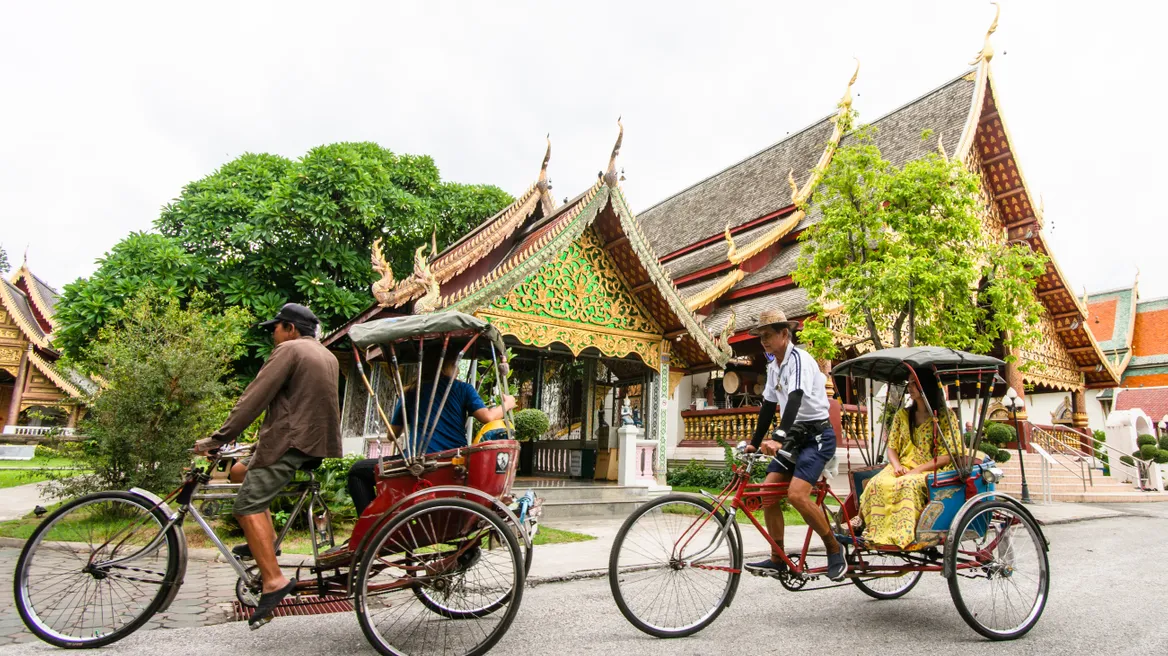
Pedaling Through the Past: A Guide to Chiang Mai Samlor Heritage Tours and Sustainable Transport
Supporting the elderly drivers of traditional three-wheeled bike taxis, the Chiang Mai Samlor (Trishaw) heritage tours are a vital initiative to help preserve an iconic, eco-friendly mode of transport while providing a steady income for one of the city’s most vulnerable labor groups. These tours represent the “Circular Economy” of cultural heritage, moving away from carbon-heavy vehicles and toward the gentle, rhythmic pace of the samlor (literally “three wheels”). By booking a tour, you are directly supporting the “Soft Power” of Chiang Mai’s street life and ensuring that the stories of the city’s senior residents continue to be told.
I remember my first samlor ride through the Old City walls. The traffic seemed to part as my driver, Uncle Boon—a sprightly 75-year-old with a smile that could light up a temple—pedaled us toward the Warorot Market. There was no engine roar, just the rhythmic clink-clink of the chain and the sound of Uncle Boon pointing out hidden shrines I would have missed from a car window. “In the old days, everyone took the samlor,” he told me. “We are the slow heartbeat of Chiang Mai.” In fifteen years of covering Southeast Asian heritage, I’ve found that the most authentic cultural connections happen at 10 kilometers per hour.
Why Cultural Heritage Transport Should Be on Your List Right Now
As Chiang Mai implements its “Green Cities” and “Green Logistics” initiatives under the Thailand Tourism Next 2026 framework, the samlor has been reimagined as the ultimate sustainable transport . The city is aggressively pursuing its “Green Bangkok 2030” project goals (replicated in the north), which aim to promote eco-friendly transport infrastructure .
The Samlor Heritage Tours are at the forefront of this movement. Under the national “7 Greens” standard, these tours have become a benchmark for “Green Community” and “Green Heart” principles. By visiting now, you are participating in a model of regenerative urban tourism that directly combats “tourism leakage”. The revenue from your tour stays entirely with the elderly drivers and their community cooperative, ensuring that the next generation sees the value in preserving this “Intangible Cultural Heritage”. As conscious travelers increasingly seek out “Must Seek” hidden gems that offer health benefits and cultural depth, the samlor offers a way to explore the city without the environmental footprint of heavy transport.
Best Time to Visit & Practical Planning Tips
To experience the city without the peak traffic and heat, strategy is essential.
- When to Go: The best time for samlor tours in Chiang Mai is in the early morning (07:30 AM to 09:30 AM) or late afternoon (04:00 PM to 06:00 PM). This is when the light is best for photography and the city’s markets are most vibrant.
- Weather: Like the rest of the north, the cool season (November to February) is ideal. In the hot season (March–May), stick to the morning tours to enjoy the cool breeze created by the movement of the trishaw.
- Getting There: Most tours start from the Three Kings Monument or the Tha Pae Gate. Using the city’s new electric bus service to reach your starting point is the most sustainable way to begin your day.
- Sample Budgets:
Top 5 Must-Experience Highlights on a Samlor Heritage Tour
1. The Warorot Market “Trot”
Navigate the bustling narrow lanes of Chiang Mai’s oldest market. A samlor can go where a car can’t, allowing you to witness the authentic trade of seasonal fruits, hand-woven textiles, and local handicrafts .
2. Wat Chedi Luang Mindfulness Chat
Visit the massive stupa in the center of the Old City. Many samlor tours stop here for a “Monk Chat,” where you can discuss Buddhism and mindfulness with local monks—a prime example of the “Life Economy” .
3. The Wualai Silver Community
Pedal to the hereditary silversmiths’ district. You’ll see artisans working at Wat Sri Suphan (the Silver Temple) and can participate in a sustainable metal-working workshop—supporting “Intangible Cultural Heritage” .
4. Back-Alley “Spirit House” Walks
The drivers know the secret history of the city. Uncle Boon showed me several “Spirit Houses” hidden in private residential alleys, explaining the link between local beliefs and nature conservation.
5. The “No-Waste” Street Food Stop
Many tours now stop at vendors who have received the “Green Leaf” mark for zero-waste practices. Try the Khanom Krok (coconut pancakes) served on a banana leaf—a “Must Taste” classic.
[Insert photo of an elderly driver on a colorful samlor – alt text: “A traditional three-wheeled samlor trishaw in the Chiang Mai Old City”]
Detailed 1-Day “Heritage Pace” Itinerary
- 07:30 AM: Meet your samlor driver at the Three Kings Monument.
- 08:00 AM: Tour of the Warorot Market; sample seasonal fruits like mangosteen .
- 09:30 AM: Visit Wat Chedi Luang for a mindfulness session with a monk .
- 11:00 AM: Pedal through the Wualai district to see the Silver Temple .
- 12:30 PM: “Sustainable Gastronomy” lunch at a “Must Taste” local spot—try the Khao Soi.
- 02:30 PM: Community Voting: Use the Tour in Thailand app to vote for the next samlor maintenance or heritage trail project funded by the Environmental Fund.
- Cost: ~1,500 THB.
Where to Stay: Best Eco-Friendly & Authentic Accommodations
- Authentic Choice: 99 Heritage Hotel: Located in the Old City, this SHA Plus certified hotel has won awards for its heritage conservation and zero-waste policies.
- Mid-Range: Riva Surya (Chiang Mai Outpost): A boutique stay that focuses on high sustainability standards and offers easy access to the river ferries for carbon-neutral transport.
- Budget: Bangkok Bed and Bike (Chiang Mai Partner): Specifically designed for cycling and trishaw enthusiasts, this hostel offers secure storage and is located near the historic center.
Food & Local Cuisine Guide: Fueling Your Ride
Eating in Chiang Mai is a “Must Taste” adventure. You’ll find the best food in the places where a car could never park.
- Must-Try Dish: Sai Oua (Northern Thai Sausage) grilled over local wood fires. The herbs used are foraged from the nearby mountain forest gardens.
- Sweet Treat: Khanom Krok (Coconut Pancakes). Look for the street vendors using traditional clay pans—they are often the heart of the neighborhood’s morning social life.
- Etiquette: When stopping at a community market, it’s polite to buy a small snack or drink from a local vendor to show appreciation for using their paths.
Sustainable & Responsible Travel Tips
- Hydrate Responsibly: Avoid buying plastic bottles. Use the reverse osmosis water machines found throughout the city to refill your reusable bottle for just 1 THB.
- Respect the Pace: A samlor is human-powered. Don’t rush your driver; the slow pace is the entire point of the experience.
- Mind the “Soi”: These narrow alleys are shared spaces. Always yield to pedestrians and elderly residents. A smile and a “Sawatdee Krub/Ka” go a long way.
- Support the Fund: Every booking through the marketplace includes a contribution to the Thailand Environmental Fund. Don’t forget to vote on the platform for local heritage restoration projects.
Packing List & What to Know Before You Go
- Breathable Clothing: Lightweight, moisture-wicking shirts are essential. Avoid dark colors that absorb heat.
- Sun Protection: High-SPF sunscreen and a peaked cap that fits under a helmet (if the samlor has one).
- Small Daypack: To carry your reusable water bottle and any “Must Buy” local handicrafts you find along the way.
- Learning Mindset: Learn a few basic Thai words (“Kop Khun Krub/Ka” for thank you) to build a quick connection with your driver.
Frequently Asked Questions (FAQ)
Is a samlor ride safe in traffic?
Most samlor tours are specifically designed to use quiet back-alleys and pedestrian zones where cars are restricted.
How much should I tip?
While the tour fee includes a fair wage for the driver, a tip of 100 – 200 THB is a generous way to support their livelihood directly.
Can I visit multiple temples in one tour?
Yes! The samlor is the perfect way to do a “Temple Hop” of the 120+ temples in the Old City without the hassle of parking.
Conclusion: See the City, Save the Soul
Choosing a Chiang Mai Samlor Heritage Tour is an act of supporting a city that is trying to find its balance between progress and preservation. It is a way to say that the value of a city isn’t measured in the speed of its transport, but in the strength of its stories and the dignity of its elders. By pedaling through these ancient alleys, you aren’t just a tourist; you are a participant in Chiang Mai’s journey toward a cleaner, greener, and more connected future. You’ll leave the city with a full stomach and a deeper understanding of the “Value over Volume” movement that is making the “Land of Smiles” a better place for everyone.
Ready to slow down and reconnect? Book your samlor adventure today and cast your vote for local cultural preservation!

Comment (0)