
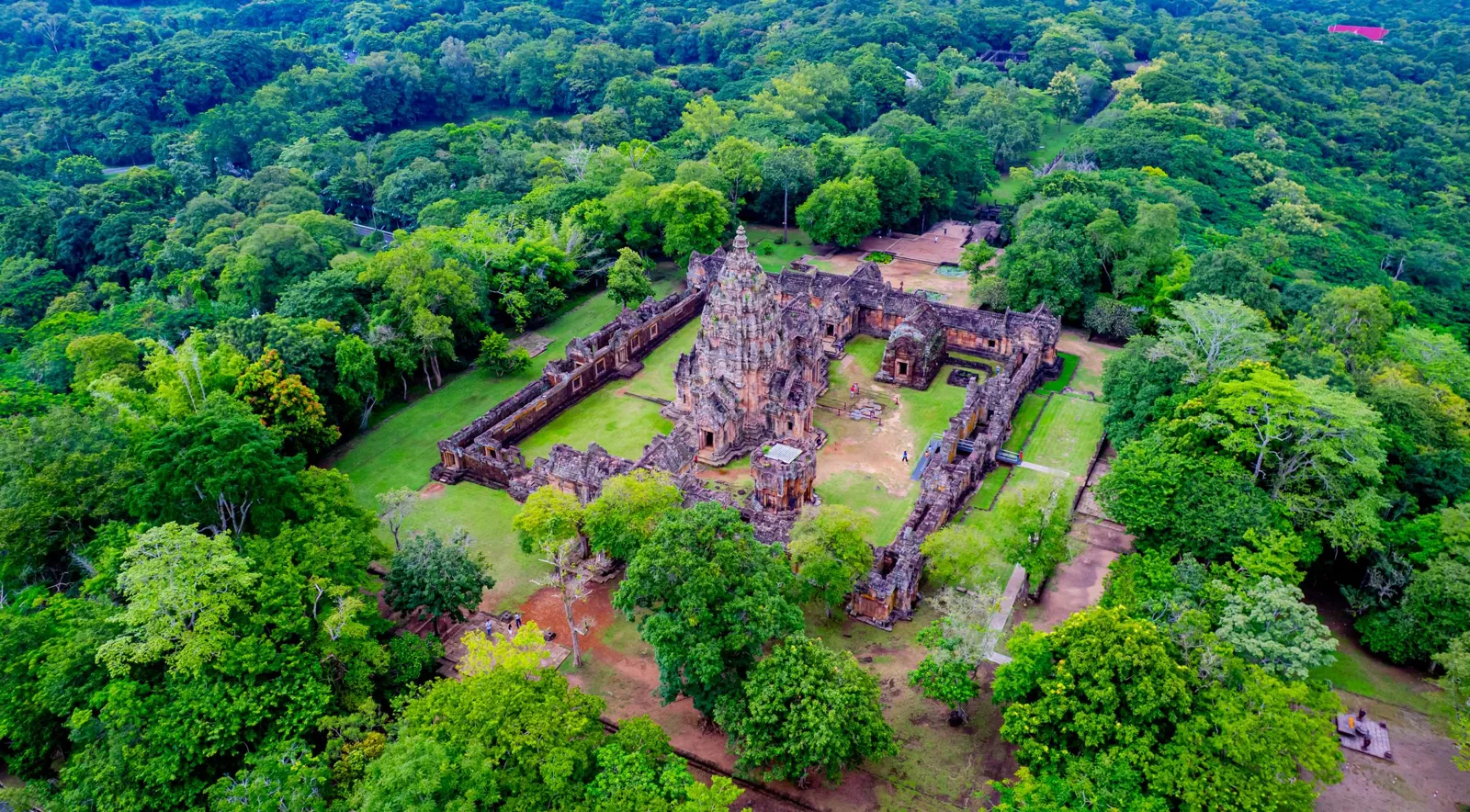
The Volcano Temple: A Guide to Phanom Rung and Cultural Resilience in Buriram
Built atop an extinct volcano, the 10th-century Phanom Rung temple complex is a masterpiece of Khmer architecture. The site is famous for its solar alignment, where four times a year, the sun shines through all 15 doorways. The community hosts annual festivals that celebrate traditional dress and local culture, ensuring that heritage remains a living part of the economy. Engaging with cultural resilience in Buriram through Phanom Rung is an act of supporting the “Circular Economy” of regional history and ensuring that the unique “Soft Power” of Thailand’s volcanic highlands continues to thrive.
I remember standing on the upper terrace of Phanom Rung at dawn. The air was cool, a remnant of the mountain’s high altitude. As the first rays of light hit the pink sandstone carvings, the lintel of Narai Banyasalin (the Reclining Vishnu) seemed to shimmer with life. A local guide named Khun Som, whose family has lived at the base of the volcano for generations, shared a secret: “We don’t worship the stone; we worship the sun that gives the stone its power.” In fifteen years of reporting on global heritage, Phanom Rung remains the most astronomically precise site I’ve seen, proving that ancient Thai-Khmer wisdom was far ahead of its time.
Why Phanom Rung Should Be on Your List Right Now
As Thailand moves toward its 2026 goals under the Thailand Tourism Next framework, Buriram has been designated as a flagship for “Fascinating Experiences” and the “Sub-Culture Economy” . The province is successfully rebranding from a “sport city” into a destination for high-value cultural depth.
Phanom Rung is the lighthouse for this movement. Under the national “7 Greens” standard, it has become a benchmark for “Green Community” and “Green Learning” . By visiting now, you are participating in a model that ensures tourism revenue supports the nearby Sarus Crane Learning Center, which has successfully reintroduced endangered birds to the volcanic wetlands . This is “Value over Volume” at its most impactful—where cultural heritage and biological conservation are woven together.
Best Time to Visit & Practical Planning Tips
- When to Go: The best window for the famous solar alignment is typically in March, April, September, and October. For the best weather, the “Cool Season” (November to February) offers crisp mountain air.
- Avoiding the Heat: Phanom Rung is exposed. Aim to arrive at opening (06:00 AM) to catch the sunrise and avoid the intense mid-day volcanic heat.
- Getting There: The park is 1 hour from Buriram city. For a sustainable arrival, use an electric shuttle or a shared “Songthaew” from the Nang Rong hub .
- Sample Daily Budgets:
Top 5 Must-Experience Highlights at Phanom Rung
1. The 15-Doorway Solar Alignment
A rare astronomical phenomenon where the sun aligns perfectly through the temple’s sanctuary. It is a “Must See” for understanding the “Soft Power” of ancient Khmer cosmology.
2. The Reclining Vishnu Lintel
See the famous carving that was repatriated from the US in 1988. It represents the “Soft Power” of national pride and the resilience of Thai cultural activists.
3. The Naga Bridge and Processional Walkway
Walk the 160-meter path lined with stone pillars. This is the first of two bridges that symbolize the crossing from the human world into the divine mountain of the gods.
4. Buriram Wetland & Sarus Crane Center
Visit the nearby conservation center to see the world’s tallest flying bird. This project has returned over 100 cranes to the wild, a prime example of “Regenerative Tourism” .
5. Volcanic Mud Cloth Dyeing
Participate in a workshop in the nearby Ban Khok Mueang community. They use 1,000-year-old fermented mud from the temple’s reservoir (Baray) to dye silk and cotton—a “Must Buy” sustainable textile .
Detailed 2-Day “Volcano and Vistas” Itinerary
Day 1: The Ascent
- 06:00 AM: Sunrise at Phanom Rung; 2-hour guided architectural tour.
- 09:30 AM: Visit the nearby Muang Tam ruins, set amid picturesque lily ponds .
- 12:30 PM: “Sustainable Gastronomy” lunch—try the Pad Kung Jom (fermented shrimp) .
- 03:00 PM: Volcanic mud-dyeing workshop at Ban Khok Mueang .
- Cost: ~1,500 THB.
Day 2: The Wings
- 07:30 AM: Morning bird watching at the Sarus Crane Learning Center .
- 10:00 AM: Guided nature hike around the Kradong Volcano forest park .
- 01:00 PM: Community Voting: Use the Tour in Thailand app to vote for the next youth guide training or crane habitat project.
- Cost: ~800 THB.
Where to Stay: Best Eco-Friendly & Authentic Accommodations
- Authentic Choice: Ban Khok Mueang Homestays: Stay on fertile volcanic land. Your stay supports local silkworm rearing and organic farming .
- Mid-Range: Honey Inn (Nang Rong): A long-standing favorite for ethical travelers, focusing on local engagement and low-impact operations.
- Sustainable Base: Play La Ploen Boutique Resort: Located near Khon Kaen but supporting Buriram routes, this resort is a leader in flora conservation and eco-learning .
Food & Local Cuisine Guide: Tasting the Volcano
In Buriram, the fertile volcanic soil creates unique flavors.
- Must-Try Dish: Volcanic Soil Rice. Rich in minerals, this organic rice is a regional specialty that supports local small-scale farmers .
- Unique Treat: Khanom Ki Mod (powdered sweet rice). A traditional snack often made during community workshops .
- Etiquette: When dining in local villages, always finish your portion to show respect for the “Sufficiency Economy” philosophy practiced by the community .
Sustainable & Responsible Travel Tips
- Hire a Local: Use guides from the Ban Khok Mueang community. They are the true gurus of the “Ancient Khmer Highway” .
- Respect the Solar Event: During alignment months, crowds can be large. Follow the rangers’ directions to protect the stone thresholds from excessive foot traffic.
- No Plastic in the Park: Buriram national parks strictly enforce the “No Foam, No Plastic” ban . Bring a reusable bottle.
- Support the Fund: Every booking made via the platform includes a contribution to the Thailand Environmental Fund to support Sarus Crane habitat protection.
FAQ
Why is Phanom Rung on a volcano?
Ancient Khmer architects believed volcanic peaks represented Mount Meru, the center of the universe. The extinct volcano provided both the spiritual height and the durable basalt stone for construction.
Is the Sarus Crane center far from the temple?
It is about a 20-minute drive, making it a perfect companion activity for a day of eco-tourism in Buriram.
Can I participate in the mud-dyeing year-round?
Yes! The volcanic mud is harvested from the ancient reservoir and fermented, a process that is available to visitors in all seasons .
Conclusion: A Living Connection
Choosing to visit Phanom Rung is an act of supporting a region that has turned its ancient history into a platform for modern resilience. By walking the processional path, you aren’t just a tourist; you are a guardian of the “Soft Power” of Isan. You’ll leave the volcano peaks not just with photos, but with the knowledge that your visit helped protect both the stone of the ancestors and the wings of the future.
Ready to stand where the sun meets the stone? Book your Phanom Rung adventure today and cast your vote for local cultural preservation!

Comment (0)