
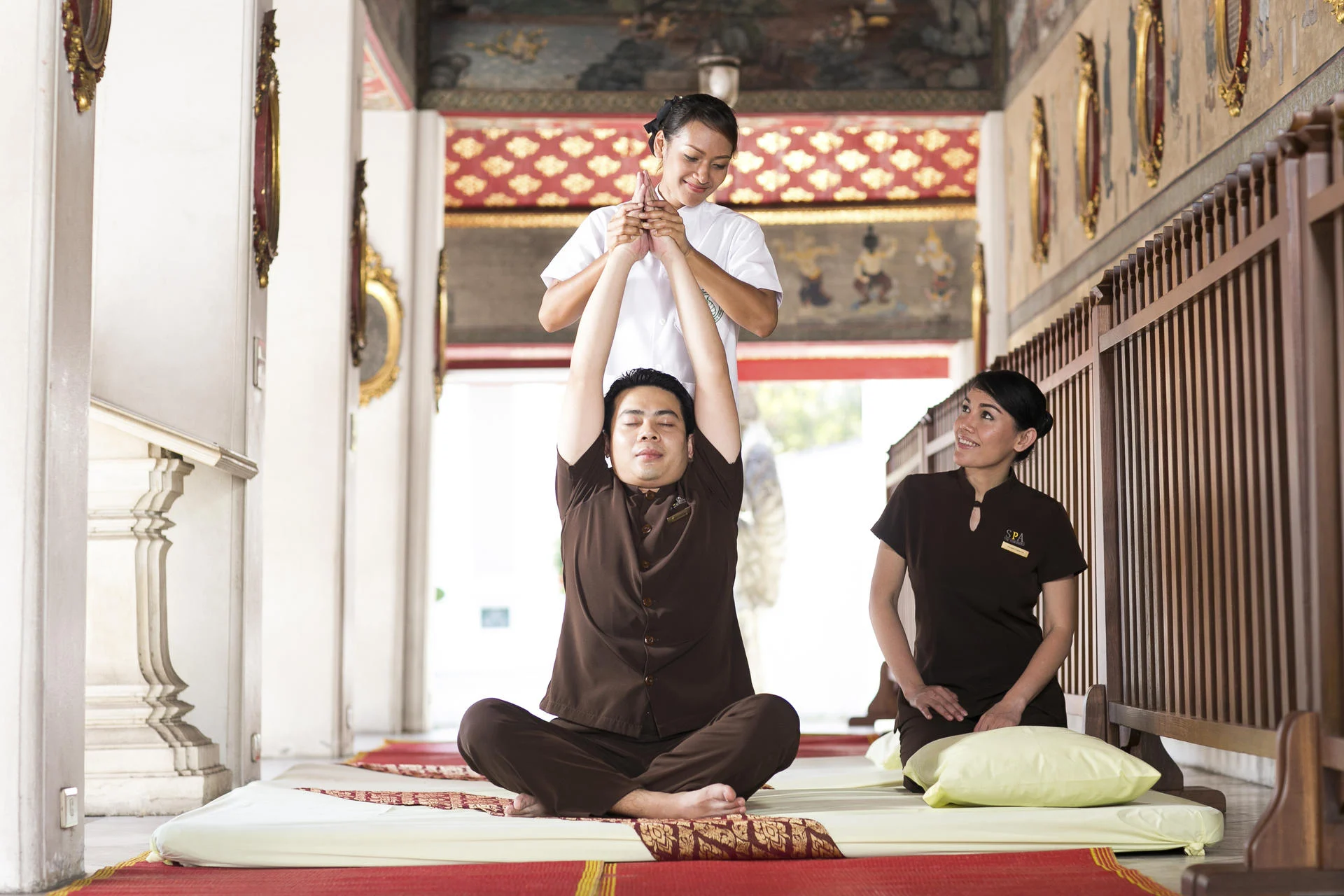
The Cradle of Healing: A Guide to Wat Pho Traditional Medicine and Traditional Thai Massage in Bangkok
Wat Pho is not just a temple; it’s a living university. As a center for the preservation of intangible cultural heritage, visiting Wat Pho supports the livelihoods of traditional practitioners. This is a “Must Try” experience that reinforces Thailand’s position as a global leader in wellness tourism. By engaging with the traditional Thai massage Bangkok heritage at its source, you aren’t just getting a treatment; you are participating in a multi-century tradition that has recently been inscribed on UNESCO’s Representative List of the Intangible Cultural Heritage of Humanity.
I remember my first visit to the massage pavilions at the back of the temple complex. The air was thick with the scent of camphor and clove, a cooling contrast to the humid Bangkok afternoon. As I watched the practitioners work—their movements a rhythmic, meditative dance of elbows and palms—I realized that this wasn’t the “spa” experience I was used to in the West. This was medical art. A local teacher once told me, “We don’t just fix the muscle; we open the wind gates of the body.” In an era of high-speed travel, Wat Pho invites you to do the opposite: to stop, to breathe, and to let the ancient wisdom of the “First University” realign your system.
Why Wellness Tourism Should Be on Your List Right Now
As we move through 2026, Thailand has repositioned itself under the “Thailand Tourism Next” framework, which targets high-value travelers through the “Life Economy” pillar—focusing specifically on wellness and medical tourism. The days of mass-market “check-in” tourism are being replaced by a desire for “Fascinating Experiences” that offer depth and personal transformation.
Wat Pho stands at the apex of this shift. While many modern spas offer a sanitized version of Thai healing, Wat Pho remains the academic heart of the practice. By choosing to receive a treatment or take a course here, you are directly supporting the “Circular Economy” of traditional knowledge. The revenue generated stays within the community of practitioners and the temple’s educational fund, ensuring that the next generation of Thai healers has the resources to keep this “Soft Power” alive.
Furthermore, the temple has recently integrated with the Tour in Thailand marketplace standards, meaning every booking contributes to the Thailand Environmental Fund, supporting projects that protect the very medicinal herbs used in these traditional treatments.
Best Time to Visit & Practical Planning Tips
Navigating one of Bangkok’s most famous landmarks requires a bit of “insider” strategy to maintain a peaceful, sustainable experience.
- Weather & Crowds: The cool season (November to February) is the most pleasant for wandering the temple grounds. However, this is also peak season. To avoid the heat and the largest crowds, aim to arrive exactly at opening time (8:00 AM).
- The Massage Pavilion: If you want a massage without a two-hour wait, head straight to the back of the temple (the South side) as soon as you arrive. Book your slot first, then explore the Reclining Buddha while you wait for your appointment.
- Getting There: Skip the gridlocked taxis. Take the MRT Blue Line to Sanam Chai Station. Exit 1 is arguably the most beautiful station in Thailand, designed to look like a royal stateroom. From there, it’s a 5-minute walk to the temple gates.
- Sample Budgets:
Top 5 Must-Experience Highlights at Wat Pho
1. The Reclining Buddha (Phra Buddhasaiyas)
While it’s the most famous site, don’t just snap a photo and leave. Look at the soles of the feet—they are intricately inlaid with mother-of-pearl representing the 108 auspicious signs of the true Buddha. This is a “Must See” for understanding the scale of Thai devotional art.
2. The Hermit Contortionist Statues (Rue-si Dat Ton)
Dotted around the garden are small statues of hermits in various stretching poses. These represent “Thai Yoga,” the physical foundation of traditional medicine. They were commissioned by King Rama III to serve as a visual textbook for the public—truly the world’s first open-air medical school.
3. The Medical Inscriptions
Look closely at the walls of the pavilions. You will see marble tablets inscribed with anatomical charts and herbal formulas. These are part of the “Memory of the World” register by UNESCO. They represent the democratization of knowledge, where anyone could come to the temple to learn how to heal themselves.
4. A Traditional Massage Treatment
This is the “Must Try” activity. Whether you choose a 30-minute foot massage or a full-hour body treatment, you are being treated by someone trained in a lineage that dates back centuries. It is firm, therapeutic, and focuses on “Sen” lines (energy pathways).
5. The Four Great Stupas (Phra Maha Chedi Si Ratchakarn)
These massive, tile-covered pagodas are dedicated to the first four kings of the Chakri dynasty. The intricate ceramic floral patterns are made from pieces of porcelain that were used as ballast on Chinese trade ships—a beautiful historical example of the “Circular Economy” and upcycling.
Detailed 5-Day “Wellness & Wisdom” Itinerary
Day 1: The Foundations of Healing
- 08:00 AM: Arrive at Wat Pho via MRT Sanam Chai.
- 08:30 AM: Morning chanting with the monks (an immersive, meditative start).
- 10:00 AM: Guided tour of the Medical Inscriptions and Hermit Statues.
- 12:00 PM: Plant-based lunch at a nearby riverside café.
- 02:00 PM: 60-minute Traditional Thai Massage at the school pavilion.
- 04:00 PM: Sunset walk along the river toward Wat Arun.
- Cost: ~1,200 THB.
Day 2: The Art of the Herb
- 09:00 AM: Visit the nearby Museum of Siam to understand the “Thai-ness” behind the culture of healing.
- 12:00 PM: Lunch at a “Must Taste” local spot in the Tha Tian district.
- 02:00 PM: Workshop on Thai herbal compresses—learn to mix lemongrass, kaffir lime, and turmeric.
- 05:00 PM: Reflexology session focusing on foot pressure points.
- Cost: ~1,800 THB.
Day 3: Mindfulness in Motion
- 07:30 AM: Public “Rue-si Dat Ton” (Thai Yoga) class in the Wat Pho gardens (often free or for a small donation).
- 10:00 AM: Meditation session with a resident monk—discussing the link between Buddhism and health.
- 01:00 PM: “Sustainable Gastronomy” lunch featuring medicinal Thai herbs.
- Cost: ~800 THB.
Day 4: Community & Modern Wellness
- 09:30 AM: Take a cross-river ferry to explore the “Green Lung” of Bangkok (Bang Krachao) to see where medicinal plants are grown in urban forests.
- 02:00 PM: Visit a local community-led urban garden project.
- Cost: ~1,000 THB.
Day 5: Integration & Impact
- 10:00 AM: Final review of the “7 Greens” of sustainable travel at the TAT Eco Learning Center outpost.
- 12:00 PM: Farewell lunch with a local host family via Local Alike.
- 03:00 PM: Community Voting: Use the Tour in Thailand app to vote for the next heritage restoration project in the Rattanakosin district.
- Cost: ~2,000 THB.
Where to Stay: Best Eco-Friendly & Authentic Accommodations
- Luxury: The Raweekanlaya Bangkok: A former royal residence turned wellness hotel. They have a vast “Imperial Garden” and prioritize organic, locally-sourced ingredients for their wellness menus.
- Mid-Range: Riva Surya Bangkok: Located on the river, this hotel is SHA Plus certified and has received awards for its sustainable waste management and water conservation efforts.
- Budget: Inn A Day: A boutique hotel in a converted coconut sugar warehouse. It’s family-run, utilizes upcycled decor, and is just steps away from Wat Pho, minimizing your transport carbon footprint.
Food & Local Cuisine Guide: Healing from Within
In Thai traditional medicine, food is medicine.
- Must-Try Dish: Gaeng Liang (Spicy vegetable soup with herbs). It is packed with fingerroot and basil, traditionally used to boost the immune system and aid digestion.
- The “Must Taste” Drink: Nam Matoom (Bael fruit tea). Known for its cooling properties and ability to soothe the stomach.
- Etiquette: When dining in the historic district, look for restaurants with the “Green Leaf” or “Thailand Good Travel” marks, which certify their commitment to zero-waste and local sourcing.
Sustainable & Responsible Travel Tips
- Respect the Dress Code: Wat Pho is a sacred site. Ensure your shoulders and knees are covered. This is the most basic form of cultural sustainability.
- Support Local Practitioners: Avoid the unlicensed street massage stalls. By going to the Wat Pho school, you ensure your money supports certified education and ethical labor standards.
- Hydrate Sustainably: Bring a reusable bottle. There are water refill stations near the massage school. Avoid buying single-use plastic bottles from vendors outside the gate.
- The Environmental Fund: When you book your Wat Pho experience through the platform, a portion of the fee goes to the Thailand Environmental Fund. Don’t forget to cast your vote on which conservation project—like protecting the mangroves or reef restoration—should receive funding this month.
Packing List & What to Know Before You Go
- Slip-on Shoes: You will be taking your shoes off constantly to enter the temple halls and the massage pavilion.
- Loose-Fitting Clothing: If you are getting a massage, wear or bring loose cotton pants and a shirt. The school provides traditional fisherman pants if needed.
- Sun Protection: The marble courtyards of Wat Pho reflect intense heat. A hat and eco-friendly sunscreen are essential.
- Hand Sanitizer: Useful after handling the coins used for “making merit” in the 108 bronze bowls.
Frequently Asked Questions (FAQ)
Does a Thai massage at Wat Pho hurt?
Traditional Thai massage is more intense than a Western “Swedish” massage. It involves deep tissue work and stretching. However, you can always tell your practitioner “Bao-Bao” (softly) or “Nak-Nak” (firmly) to adjust the pressure.
Can I take a massage course if I’m not a professional?
Yes! The Wat Pho Massage School offers short-term courses (5-10 days) for beginners. It’s a wonderful way to bring a piece of Thai culture home with you.
Is the massage school accessible for travelers with disabilities?
While the old temple grounds can have uneven steps, the massage pavilions are generally on the ground level. Operators like Tripseed can arrange specialized accessible tours to Wat Pho.
Conclusion: A Legacy of Balance
Visiting the Wat Pho Traditional Medicine and Massage School is an invitation to reconnect with the rhythms of the human body. In a world that often prioritizes speed over substance, Wat Pho offers a different path—one rooted in balance, mindfulness, and the preservation of ancient wisdom. By choosing this experience, you aren’t just a traveler; you are a guardian of Thailand’s intangible heritage. You’ll leave Bangkok not just with a relaxed body, but with a deeper appreciation for the “Soft Power” of a nation that has spent centuries learning how to heal.
Ready to find your balance? Book your Wat Pho wellness experience today and cast your vote for local cultural preservation!

Comment (0)