Thailand Travel Update: Safety and New Sites
Navigate Thailand's monsoon warnings, border risks, and the new Wat Phra Mahathat UNESCO site with this practical guide.
Thailand is currently a land of sharp contrasts. While state meteorologists are issuing urgent nationwide warnings for severe monsoon weather and flash floods, the Tourism Authority of Thailand (TAT) is simultaneously launching a major campaign for a newly inscribed UNESCO World Heritage site. This is the reality of traveling here right now: you need to dodge torrential rain and navigate strict border security to find the country’s newest cultural gems. This Thailand travel update is designed to help you pivot your itinerary immediately, swapping risky border runs and flooded islands for a deep dive into the southern heartland. This is for independent travelers currently in Thailand or arriving in the next two weeks who want to avoid getting stranded or fined while still seeing something incredible. The opportunity here is to be among the first to explore Nakhon Si Thammarat’s living heritage without the crowds that will surely follow the UNESCO designation, provided you can navigate the current weather patterns safely.
Why It Matters Right Now
The timing of this Thailand travel update is critical because two opposing forces are affecting logistics simultaneously. On one hand, the TAT has kicked off a year‑round campaign celebrating Wat Phra Mahathat Woramahawihan’s inscription as a UNESCO World Heritage site TAT celebrates Wat Phra Mahathat UNESCO World Heritage inscription with year‑round campaign. This puts Nakhon Si Thammarat on the map in a big way, encouraging visitors to explore the monastery’s architecture and traditions. However, on the other hand, the country is bracing for severe monsoon weather. The Thai Meteorological Department has issued a four‑day warning for torrential downpours, widespread flash floods, and dangerous marine conditions expected to impact almost every region Severe Monsoon Weather Hits Thailand: Four‑Day Warning Issued for Torrential Rain.
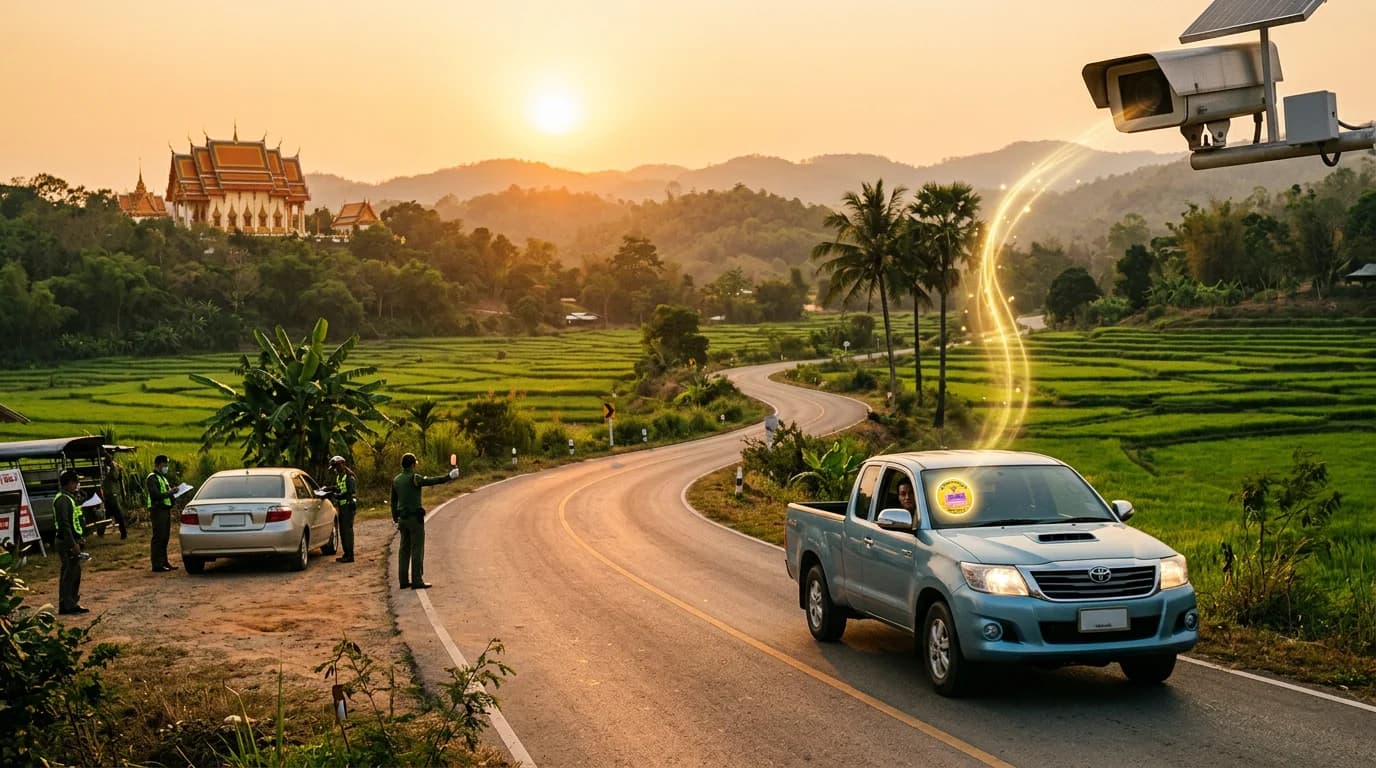
If you are planning a standard island‑hopping route in the Gulf or Andaman coasts right now, you are likely to face cancellations and rough seas. Ferries from the mainland to Koh Samui, Koh Phangan, Koh Tao, and the more remote Koh Lipe have already reported delays of 3‑5 hours, and in some cases complete shutdowns for up to 48 hours. Moreover, the Mae Sai District Chief is currently sending a very strong warning to tourists traveling across the border to Tachileik, stating that strict adherence to local rules is required to avoid severe legal trouble Travelers Cautioned When Crossing the Chiang Rai‑Myanmar Border in Tachileik. Ignoring these warnings can result in more than just a ruined day; it can lead to safety hazards or legal entanglements. Acting on this information now allows you to shift your base of operations to a more stable inland location like Nakhon Si Thammarat, which is accessible by train and offers a wealth of cultural experiences that are not weather‑dependent.
The Monsoon in Numbers
- Rainfall: Forecasts predict 150‑200 mm of rain over the next four days in the central and southern provinces, roughly double the monthly average.
- Wind: Sustained gusts of 30‑45 km/h along the coasts, with occasional spikes to 60 km/h.
- Sea State: Wave heights of 2.5‑3.5 m are common; any forecast above 2 m should be treated as a red flag for boat travel.
- Road Impact: The Department of Highways reports that 12 % of provincial roads are prone to temporary closures after 50 mm of rain in 24 hours, especially in low‑lying districts.
These figures illustrate why a proactive itinerary rewrite is not just advisable—it’s essential for safety and budget management.
The Play: Step‑by‑Step
Below is a granular, actionable plan that turns vague advice into concrete tasks. Each step includes sub‑tasks, realistic cost estimates, and time frames so you can copy‑paste the plan into your travel notebook or digital planner.
1️⃣ Audit Your Marine Travel Immediately
- Visit the official forecast: Go to the Thai Meteorological Department’s marine page (https://www.tmd.go.th/Marine) and locate the “Marine Forecast – 48 h” table for the Gulf of Thailand and the Andaman Sea.
- Check wave height thresholds: If the table shows > 2 m for any day you intend to travel, mark that leg as high‑risk.
- Contact ferry operators: Most major operators (e.g., Lomprayah, Seatran, Raja Ferry) have WhatsApp hotlines. Send a quick message: “Hi, I have a booking for 15 May 2024, 08:00 AM from Surat Thani to Koh Samui. Is the service running?”
- Document responses: Record the reply in a spreadsheet (column A: date, column B: route, column C: status). If you receive a “Cancelled” or “Delayed > 2 h” response, immediately re‑book or refund.
- Financial impact: Refunds for a standard ferry ticket range from 200‑400 THB (≈ $6‑$12 USD). Factor this into your budget; you’ll likely save money compared to a stranded night on an island.
- Alternative land routes: If the ferry is cancelled, consider a bus‑to‑train combo. For example, a 3‑hour bus from Surat Thani to Chumphon (≈ 300 THB) plus a 2‑hour train to Hat Yai (≈ 350 THB) bypasses the coastal stretch entirely.
2️⃣ Skip the Tachileik Border Run
- Delete the border segment: Open your itinerary in Google Docs or Notion and delete the line that reads “Mae Sai → Tachileik (Visa run, 2 days).”
- Replace with a cultural alternative: Add a half‑day visit to Wat Rong Khun (the White Temple) in Chiang Rai. Entry fee: 100 THB; travel time from Mae Sai: 1 hour by songthaew.
- Safety note: The district chief’s warning specifically mentions “random checkpoints” and “mandatory documentation checks” that have led to fines up to 5,000 THB for minor infractions. By staying on the Thai side, you eliminate that risk.
- Time savings: The average border crossing, when it works, takes 3‑4 hours. Removing it frees up at least 5 hours of travel time, which can be reallocated to rest or local exploration.
3️⃣ Re‑Route to Nakhon Si Thammarat
- Book a train now: Use the State Railway of Thailand website (https://www.railway.co.th) or a trusted aggregator like 12Go.asia. Choose the Rapid #33 departing Bangkok’s Hua Lamphong at 20:15 hrs, arriving Nakhon Si Thammarat at 09:45 hrs the next morning. A 2nd‑class fan‑cushioned seat costs 1,050 THB (≈ $31 USD). For a sleeper berth, expect 1,300‑1,500 THB.
- Reserve a seat: Seats sell out within 24 hours for the holiday season, so book immediately.
- Travel time breakdown: The journey covers ~ 800 km, with a 12‑hour travel time that includes a 30‑minute stop at Surat Thani for food.
- Alternative bus option: If you prefer road travel, the Lomprayah Express Bus from Bangkok’s Mo Chit Terminal to Nakhon Si Thammarat costs 850 THB and takes 13‑14 hours. Buses have reclining seats and a small fridge for water.
- Why Nakhon Si Thammarat? The city sits on a plateau that drains well, reducing flood risk. It also hosts the new UNESCO site, meaning the local tourism board has prioritized clean facilities, multilingual signage, and a steady supply of guides.
4️⃣ Plan Your Visit to Wat Phra Mahathat
- Opening hours: 06:00 – 18:00 daily. The main chedi is open for guided tours every hour on the hour.
- Guided tour cost: 200 THB for a 45‑minute English‑language tour; 150 THB for Thai‑language.
- Dress code checklist:
- Long‑sleeved shirt or blouse (no sleeveless tops)
- Pants or long skirt (no shorts)
- Closed shoes (sandals are allowed if they cover the toe)
- Optional: a light scarf to cover shoulders in the prayer hall.
- Must‑see features:
- The Golden Buddha (Phra Phuttha Sila) – a 7‑meter high statue dating to the 15th century.
- The mural corridor – 120 meter long, depicting the Jataka tales in traditional Thai style.
- The ancient bell tower – built in 1620, still used for daily chants.
- Photography policy: No flash inside the inner sanctum. Use a phone‑compatible lens filter to reduce glare.
- Food break: The temple grounds contain a modest kiosk selling khao mok (Thai biryani) for 50 THB and coconut‑sweetened sticky rice for 30 THB.
5️⃣ Prepare for Inland Rain
- Gear list:
- Packable rain poncho (1 L capacity, folds into a 15 × 20 cm pouch) – ~ 300 THB.
- Waterproof backpack cover – 250 THB.
- Silicone‑sealed zip‑lock bags for phone, passport, and camera – 150 THB per set.
- Quick‑dry travel towel – 120 THB.
- Local weather apps: Install Thai Weather Live (available on Android and iOS) and enable push notifications for Nakhon Si Thammarat.
- Emergency cash: Keep 1,000 THB in small bills in a waterproof pouch; many small vendors only accept cash.
- Health tip: Heavy rain can increase mosquito activity. Apply DEET‑based repellent (e.g., 10 % concentration) at least twice a day.
6️⃣ Build a Buffer Day
Because monsoon‑related delays can cascade, schedule a “buffer day” in your itinerary. For example, after arriving in Nakhon Si Thammarat on Day 5, plan Day 6 as a flexible day: either explore the Nakhon Si Thammarat Night Market or rest at your hotel. If a sudden flash‑flood forces a road closure, you’ll have a pre‑planned cushion rather than scrambling.
7️⃣ Secure Accommodation Early
- Mid‑range option: Baan Suan Guesthouse – rooms 1,200‑1,500 THB per night, includes free Wi‑Fi and a rooftop terrace. It’s a 10‑minute tuk‑tuk ride from the temple.
- Budget option: Hostel 24/7 – dorm beds at 350 THB, shared kitchen, located near the train station.
- Luxury option: The Siam Resort – 3,500 THB for a sea‑view suite, offers complimentary airport pickup and a rain‑proof lounge.
- Booking tip: Use Booking.com with the “Free cancellation” filter; many properties allow cancellation up to 24 hours before check‑in, protecting you against sudden itinerary changes.
8️⃣ Stay Connected & Informed
- SIM card: Purchase a TrueMove H tourist SIM (99 THB for 15 GB of data, valid 30 days). It works nationwide and includes free access to the Thai Meteorological Department’s API.
- Telegram groups: Join the @ThailandTravelUpdates channel for real‑time alerts on floods, ferry schedules, and border news.
- Offline maps: Download the Maps.me offline map for the southern region; it highlights flood‑prone zones in yellow.
Real‑World Example
Traveler Profile: Mark – The Adaptive Backpacker
Background: Mark, a 29‑year‑old solo traveler from Berlin, arrived in Bangkok on 12 May 2024. His original itinerary was:
- Bangkok → Chiang Rai (bus, 9 hrs)
- Chiang Rai → Mae Sai (songthaew, 2 hrs)
- Mae Sai → Tachileik (border run, 1 day)
- Return to Bangkok (flight, 1 hr)
- Bangkok → Surat Thani (flight, 1.5 hrs)
- Surat Thani → Koh Samui (ferry, 2 hrs)
- Koh Samui → Koh Phangan (ferry, 30 min)
- Koh Phangan → Bangkok (flight, 1 hr)
Problem: On 13 May, while checking his phone, Mark saw the district chief’s warning and the four‑day monsoon alert. He realized his border run could result in a fine of up to 5,000 THB and the ferry segment had a wave‑height forecast of 3.2 m.
Decision Process: Using the step‑by‑step plan above, Mark:
- Cancelled the Tachileik crossing via the Mae Sai border office (refund: 250 THB).
- Contacted Lomprayah to confirm the Surat Thani‑Koh Samui ferry. The operator replied: “All services suspended until 16 May due to high seas.”
- Re‑booked a Rapid #33 train from Bangkok to Nakhon Si Thammarat (second‑class fan seat, 1,050 THB). He booked the ticket on 12 May at 21:30 hrs via 12Go.asia.
- Reserved a room at Baan Suan Guesthouse (1,300 THB/night, free cancellation) for 15 May‑18 May.
- Purchased a TrueMove H tourist SIM (99 THB) at Suvarnabhumi Airport.
- Packed a rain poncho, zip‑lock bags, and a small first‑aid kit.
Execution Timeline:
- 14 May (Morning): Board the overnight train at 20:15 hrs; sleep in a fan‑cushioned seat, waking up refreshed at 09:45 hrs in Nakhon Si Thammarat.
- 14 May (Mid‑day): Drop luggage at the guesthouse, then walk 1.2 km to Wat Phra Mahathat. He joins the 200 THB English‑guided tour at 11:00 hrs, learning about the 9‑century “Sukhothai‑style” chedi that earned UNESCO recognition.
- 14 May (Afternoon): After the tour, he samples khao mok at the temple kiosk (50 THB) and shops for local silk scarves.
- 15 May: Rain forecasts predict 80 mm of rain. Mark stays indoors, exploring the Nakhon Si Thammarat National Museum (entry 100 THB) and using the rain‑proof lounge at his guesthouse.
- 16 May: The monsoon warning lifts for the southern region. He takes a local minibus to the coastal town of Khanom (fare 120 THB) for a day‑trip to the Khanom Rock viewpoint.
- 17 May: Returns to Bangkok via a train (Rapid #31, 1,200 THB) and catches his flight home.
Financial Outcome:
- Original budget for the border run and island hopping: ~ 2,500 THB (border fees) + 1,200 THB (ferry) + 800 THB (extra accommodation) = 4,500 THB.
- Revised budget after pivot: 1,050 THB (train) + 1,300 THB (guesthouse) + 200 THB (tour) + 150 THB (food) + 99 THB (SIM) = 2,799 THB.
- Savings: Approximately 1,700 THB (≈ $55 USD) plus avoided risk of fines or being stranded on a flooded island.
Traveler Profile: Lila – The Family Vacationer
Lila, a mother of two from Toronto, had booked a family cruise that included a stop at Koh Lipe on 20 May. After seeing the monsoon alert, she consulted the step‑by‑step guide and decided to swap the cruise leg for a land‑based cultural itinerary:
- Day 1‑2: Bangkok (city tour, 2,500 THB per adult).
- Day 3‑5: Train to Nakhon Si Thammarat, stay at a family‑friendly resort (2,800 THB per night, includes pool and kids club).
- Day 6‑7: Day trip to Khao Luang National Park (guided hike, 1,200 THB per person).
- Day 8: Return to Bangkok by flight (3,500 THB per adult, 2,800 THB per child).
The family saved ~ 3,000 THB on cruise fees that were refundable after the operator cancelled the Koh Lipe leg due to the monsoon. They also avoided the risk of being trapped on a remote island during a flood, which could have required a costly helicopter evacuation.
Caveats
- Not a Beach Destination: Nakhon Si Thammarat is inland‑focused; while it has beautiful coastal districts like Hat Yai and Khanom, the primary draw is cultural heritage. If sunbathing is non‑negotiable, consider a planned rainy‑day beach like Pattaya, where the city has robust flood‑control infrastructure.
- Potential Train Delays: Heavy rain can cause track maintenance or landslides, especially on the Southern Line between Surat Thani and Phatthalung. Historically, the average delay during monsoon season is 30‑45 minutes per 100 km. Build at least 2‑hour buffer after arrival before any onward travel.
- Limited English Signage: The UNESCO site’s recent inscription means some interpretive panels are still in Thai. Hiring a local guide (200‑300 THB) can bridge the language gap.
- Flash Flood Risk Inland: Even cities with good drainage can experience flash floods in low‑lying neighborhoods. Avoid staying near the Tha Chalom riverbank during heavy rain.
- Currency Fluctuations: The Thai Baht can swing ± 3 % against the USD during monsoon‑related tourism dips. Keep an eye on exchange rates; buying a small amount of cash (2,000 THB) before the trip can hedge against a sudden devaluation.
Action Items Checklist
- [ ] Daily Weather Check: Bookmark https://www.tmd.go.th and set a 7 am reminder on your phone to review the latest marine and inland forecasts.
- [ ] Cancel/Reschedule Ferries: Use a spreadsheet to track each ferry leg; email or message operators for confirmation.
- [ ] Book Train to Nakhon Si Thammarat: Secure a 2nd‑class seat (≈ 1,050 THB) or sleeper berth (≈ 1,300 THB) today to guarantee availability.
- [ ] Reserve Accommodation: Choose a property with free cancellation; book at least 2 nights to allow for a buffer day.
- [ ] Purchase Rain Gear: Order a packable poncho and waterproof bags from local retailers (e.g., Decathlon or Central Department Store) – expect to spend ~ 500 THB total.
- [ ] Download Offline Maps: Save the southern Thailand region in Maps.me for navigation without data.
- [ ] Join Telegram Alerts: Subscribe to @ThailandTravelUpdates for instant push notifications on floods and border changes.
- [ ] Prepare Documentation: Keep a digital copy of your passport, visa, and travel insurance on a cloud service (Google Drive) and a printed copy in a waterproof folder.
If you want more on‑the‑ground logistics and route planning delivered to your inbox, sign up for the newsletter at /newsletter.
Ready to explore Thailand?
Browse tours and activities, or tell us what you're looking for and we'll suggest the best options.
Stay Connected in Thailand
Airalo eSIMs work on arrival — no physical SIM needed. Data plans from $5 for 7 days.
Travel Insurance for Thailand
Medical, trip cancellation, and adventure sports covered. Plans from $1.5/day.